
Every business context is unique, and each has its own needs and characteristics. However, this does not mean that there are no efficiency actions applicable to all manufacturing companies. The focus of this article is precisely to describe some best practices useful for improving the production process as a whole.
Having access to production data in real time is fundamental to optimizing the production process. Thanks to this data, it is possible both to have a 360-degree overview of everything that is happening and to conduct analyses that help predict potential problems in the system, allowing for effective decisions that improve the company's efficiency and productivity. Without this data, it is not possible to make objective and informed decisions.
Unlike in the past, however, the main challenge today for every company is no longer just being able to extract data, but rather obtaining the correct interpretation of it.
Machine downtime is another critical factor to monitor. These are the moments when the machine is stopped, and therefore production is interrupted. Reducing them is essential to decrease costs and increase productivity.
KPIs (Key Performance Indicators) are performance indicators that allow for the evaluation of production efficiency. Their monitoring and management provide an immediate overview of business performance. They are used to track what is happening on the production lines and analyze changes in operational results.
Other key indicators, on the other hand, are the calculation of the production efficiency of resources, such as machines and operators, and OEE (Overall Equipment Effectiveness). Monitoring efficiency allows Management to intervene promptly in case of problems or difficulties that could negatively affect the performance of orders, while OEE is an important indicator to analyze to improve the utilization capacity of machines and tools. The latter summarizes three crucial aspects of control: availability, efficiency, and process quality. Calculating it finally allows for the identification of potential improvements and the optimization of the use of production resources.
The final aspect to consider is the waste produced during the process, which can significantly reduce production quality and cause considerable economic losses. To avoid unpleasant consequences, it is useful to introduce correct waste mapping, in order to identify recurring causes of defects or product non-conformities and to plan corrective actions.
As we mentioned before, the real challenge does not lie entirely in data collection, but in the correct interpretation of it. Industrial IoT (Internet of Things) and data collection systems can help collect and analyze information in real time, while KPI analysis and management software allow for an accurate evaluation of business performance.
In conclusion, the optimization of production processes is necessary for a company's success and requires the adoption of appropriate technologies and a targeted approach. By implementing the tips described above and using the right tools, manufacturing companies can achieve a more efficient, intelligent, and optimized production.
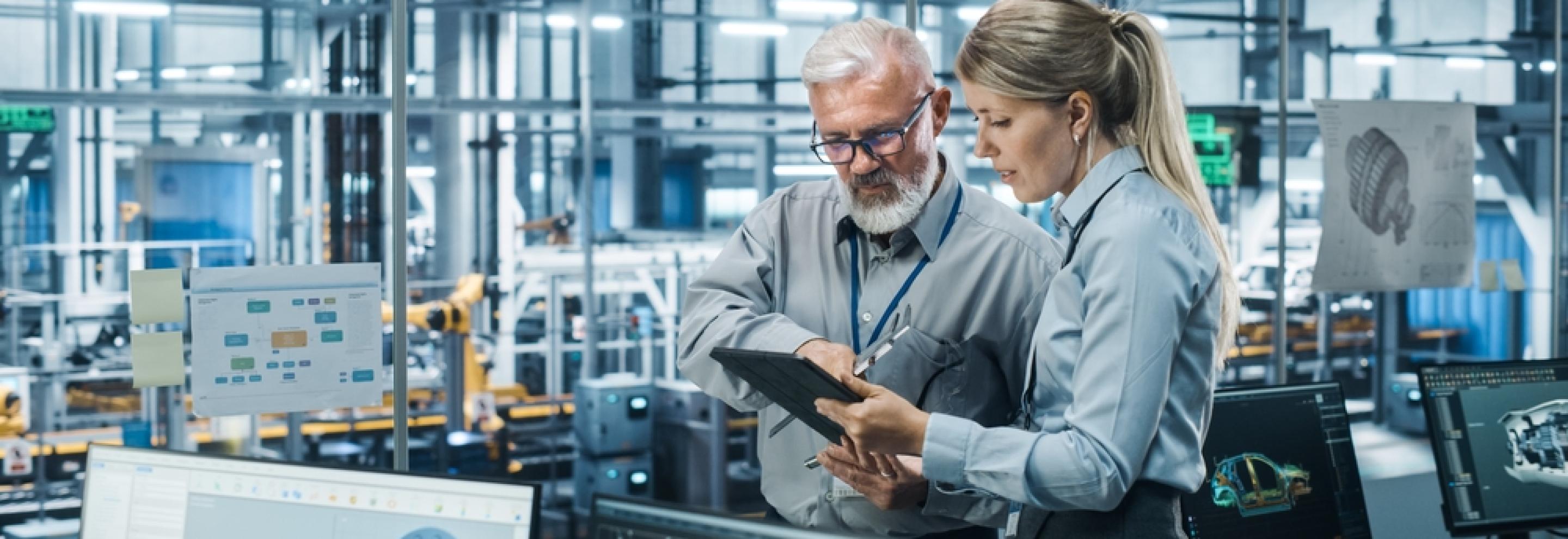
Production optimization: an efficient process
The key points of production optimization: real-time data access, reduction of machine downtime, monitoring of performance indicators, and decrease of waste.

Giulia Alboccino · 28 2023
We have selected some articles that may be of interest to you.
29/11/2023
Product costification: what it is and what the objectives are
We are in the area of business process optimization; today we are talking about product costing: how to determine the final price and how to improve the industrial production process.
- #

19/06/2023
Reducing business costs is always possible: find out how
Reducing business costs has always been a crucial goal for companies of all sizes and sectors. Discover how process optimization strategies can accelerate your business.

19/07/2023
Warehouse management: how to optimize space
The warehouse represents a crucial element for companies operating in the logistics and production sector. For this very reason, one of the most important goals for a company is the efficient management of its spaces.