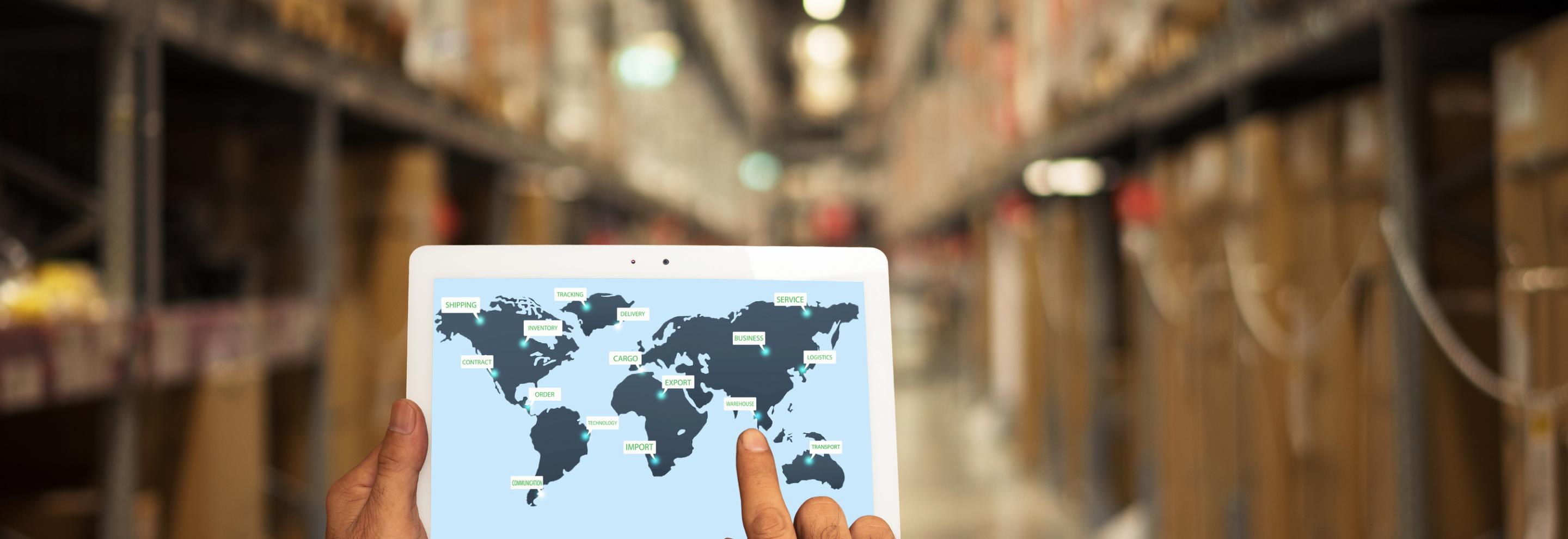
All national incentives provided for investments in corporate internationalization. A grant to support all companies wishing to find customers abroad.
Redazione · 27 2021
What is meant by internationalization?
Business internationalization occurs when a company invests to adapt to international markets or environments, particularly nations and cultures. It is not merely about offshoring or selling products in foreign countries as well as in the local market; it means producing products or services for different markets and therefore cultures and tastes different from national ones. Obviously, such processes are complementary in achieving the goal of the global market.
Currently, the way to grow most rapidly and be a competitive company is to invest in internationalization and seek new markets and sales sectors. "Made in Italy" is an internationally recognized brand, and Governments themselves have decided to invest in this project also to attract new international investors; in fact, during 2018, the public support system for internationalization directly assisted approximately 90,000 Italian entities, mostly companies producing goods or services. The measures available are various and are not implemented solely by MISE, but also by the Chambers of Commerce and the Regions.
The main national calls for applications
Internationalization Vouchers
This is a non-repayable grant in favor of all those SMEs that intend to internationalize through a Temporary Export Manager (an external business consultant with a specific contract for the implementation of a development plan in the foreign market) who studies, designs, and manages processes and programs in foreign markets; this would be an ordinary management cost, which impacts only the income statement. With this contribution, MISE aims to address SMEs (regardless of legal form) with a minimum turnover of 500,000 euros and innovative Start-Ups.
There are two types of Vouchers: a) "Early stage" Voucher, in the amount of 10,000 euros (8,000 euros for companies already benefiting from the first edition of the Voucher), against a service contract of an amount at least equal to 13,000 euros, net of VAT; b) "Advanced stage" Voucher, in the amount of 15,000 euros, against a service contract of an amount at least equal to 25,000 euros, net of VAT.
The granting of vouchers takes place on the basis of the chronological order of receipt of the applications, after verifying the truthfulness of the information declared in the application and taking into account the financial reserves.
Export support law 295/1973
This is an interest rate contribution on export loans granted by Italian or foreign banks and allows stabilization at the fixed CIRR rate. The tool allows Italian exporting companies to offer foreign buyers/clients payment deferrals under competitive conditions in line with OECD agreements. The payment deferral must be equal to or greater than two years from the starting point of the credit. This incentive is aimed at all companies exporting investment goods to countries worldwide. The request is not submitted directly by the company, but by the financing bank.
Equity participation in non-EU companies
This is an interest rate contribution on the financing obtained by the Italian company for the acquisition of a shareholding in a foreign company. The contribution rate is equal to 50% of the reference rate provided by DPR 902/76, in force on the date of signing the financing contract, and is fixed for the entire duration of the incentive.
Subsidized loans law 394/1981
Subsidized rate loans, equal to 10% of the EU reference rate, aimed at facilitating the international development of Italian companies, particularly SMEs. It is aimed at all companies regardless of size, falling within the de minimis Regulation.
Within the scope of the measure, the following are financed: - Feasibility studies to evaluate entry into a non-EU market: financing of personnel, travel, and accommodation expenses for the drafting of feasibility studies related to productive or commercial investments - Entry programs into non-EU markets: for expenses incurred for the creation of an office, showroom, shop, or corner, including personnel expenses and those related to promotional activities - Technical assistance programs: for expenses incurred for the training of operational personnel in investment initiatives in non-EU countries (includes costs for personnel, travel, accommodation, and consultancy) - Participation in trade fairs, exhibitions, and system missions in non-EU markets. - Capitalization of exporting SMEs: financing aimed at strengthening the solidity of Italian companies to increase their international competitiveness.
At the Regional level, thanks to European funds, every region, although with different methods, has been able to implement a call for internationalization for companies with a registered or operational office in the respective regions.
For example, the Lombardy Region has made available medium-long term financing aimed at supporting specific investments for international development, for a minimum amount of 50,000 euros up to a maximum of 500,000 euros, contributing up to 80% of the total eligible expenditure.
The Lazio region has established its own Internationalization Voucher, which is a non-repayable grant in an amount between 45% and 70% of the total amount of the Project.
The Veneto region has issued a call for a capital grant incentive on 50% of the expenses actually incurred for the implementation of the project, with a minimum support of 60,000 euros.
These are only 3 briefly described examples, but only for the purpose of understanding the scope of the incentives, which, although similar, differ in the forms and percentages of the project supported.
I also recommend checking if the chamber of commerce in your city has issued calls to promote exports. Again as an example, the Verona Chamber of Commerce had issued a call, now closed, which gave a contribution equal to 20% of the expenses incurred for international trade fairs and 50% for expenses incurred for the implementation of promotion initiatives abroad, exclusively in an aggregated form, for "Destinazione Verona".
conclusions
Made in Italy is always appreciated worldwide and the Italian economic situation forces entrepreneurs to look toward foreign markets. The possibility of investing in a Temporary Export Manager to guide and implement processes, incentives for participation in international trade fairs, and access to subsidized loans are certainly valid tools and of great help in looking toward new markets.
We have selected some articles that may be of interest to you.
What is the INAIL ISI 2023 call for applications? Who is it aimed at and which projects are eligible? Our Finance consultant answers all your questions.
What is it, how does it work, and who can benefit from the Guarantee Fund? Here is everything you need to know about the incentive managed by Mediocredito Centrale Spa.