
What is augmented reality and how does it work
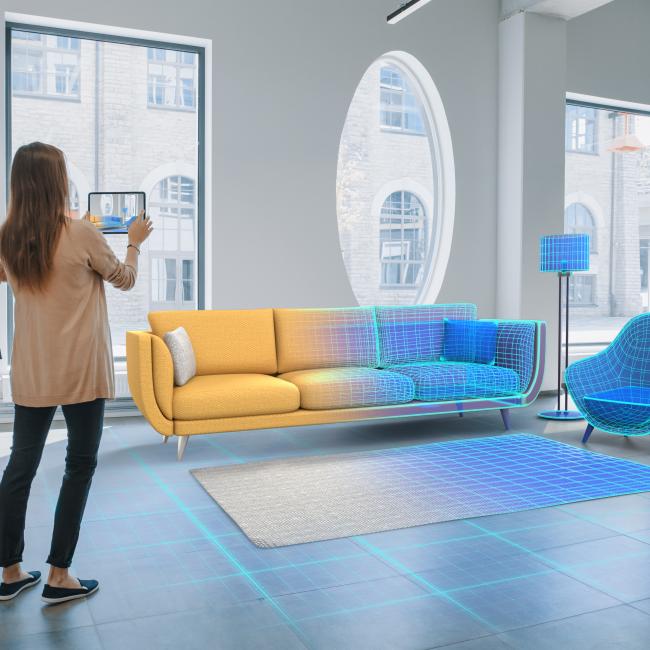
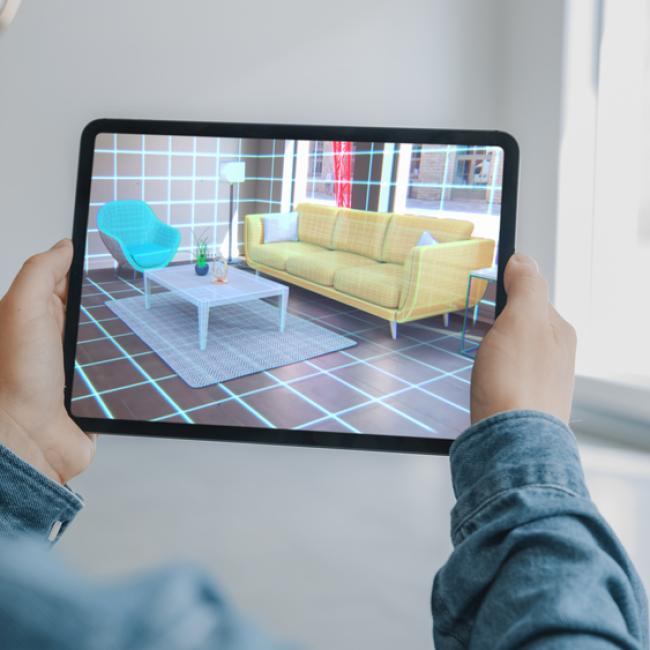
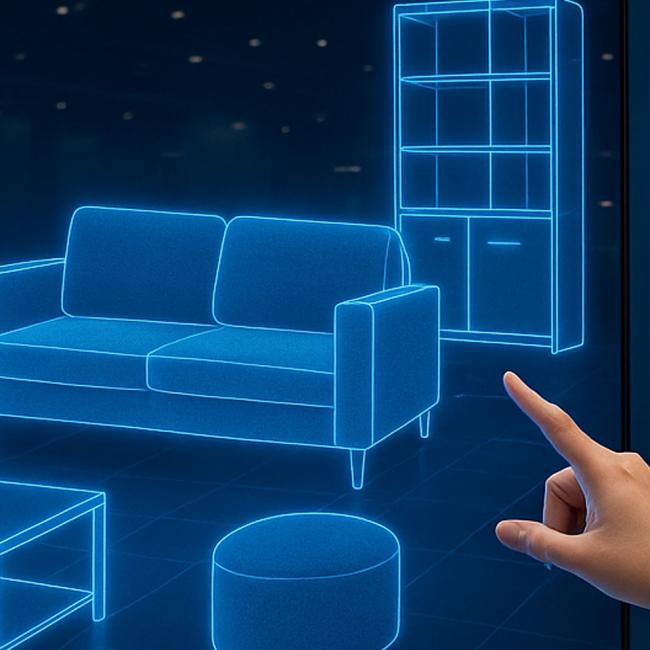
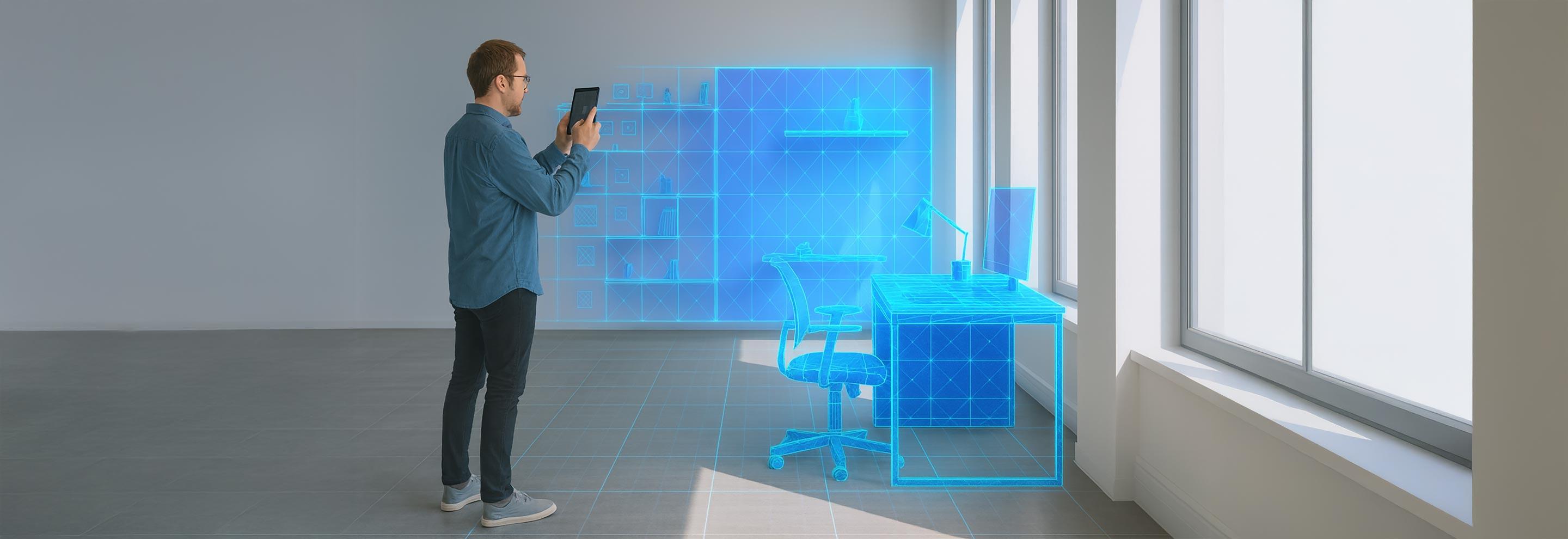
Augmented reality is a technology that allows you to overlay virtual elements (such as a 3D product) onto the real world, viewing them through the camera of a smartphone, tablet, or AR headset. This is not "science fiction": today, a link or a QR code is enough to allow anyone to see a 3D object directly in their own physical space... on a desk, a floor, a wall, or even in outdoor environments. This ease of access has made AR an extremely useful solution in many contexts, from sales to training.The advantages of augmented reality for product presentation
1. Realistic visualization in the context of useThe most immediate advantage of AR is the ability to see the product in the real world, with correct proportions. Whether it is industrial machinery, furniture, an electronic device, or a home accessory, the user can intuitively understand dimensions, footprint, and positioning.
2. Engaging and memorable experience
Making a product appear "in front of them," in their own space, generates a surprise effect and engagement far superior to an image or a video. This impact translates into greater attention, more time spent on the content, and a higher propensity to purchase.
3. Support for sales and commercial dialogue
For sales teams, agents, and retailers, AR becomes a practical tool to be used in live or remote presentations. It allows the product to be shown at any time, without the need to physically carry samples or models.
4. Reduction of pre-purchase uncertainties
The ability to see the product in one's own environment, and perhaps test combinations of color, size, or accessories, reduces the doubts of the potential customer and accelerates the decision-making process.
5. Perceived innovation
Using augmented reality conveys a modern and digital image of the company. It communicates attention to technology, but above all to the customer experience: an important lever in trade fairs, showrooms, and B2B negotiations.
Where augmented reality is applied
The fields of application are now cross-sector.- Furniture and interior design: visualize furniture, chairs, kitchens, or accessories directly at home or in a showroom.
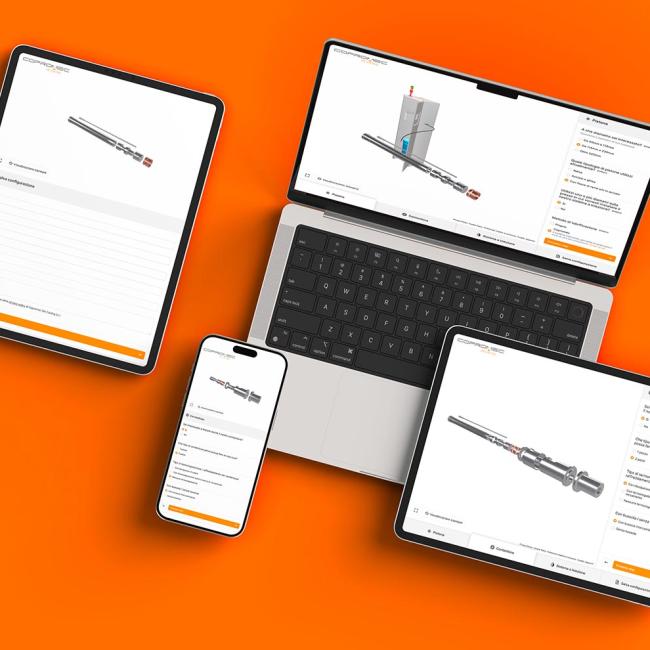
- Machinery and industrial components: show plants or complex technical parts with interactive details and functionalities.
- Retail and accessories: virtually try on shoes, bags, glasses, or jewelry.
- Construction and plant engineering: evaluate footprints and installations in the real context.
- Technical training and maintenance: simulate operational scenarios and instruct personnel without risk or physical materials.
↑ Want to try it in augmented reality? Click on "Place in your environment" and see how it looks in your space!
Augmented reality and 3D: two complementary technologies
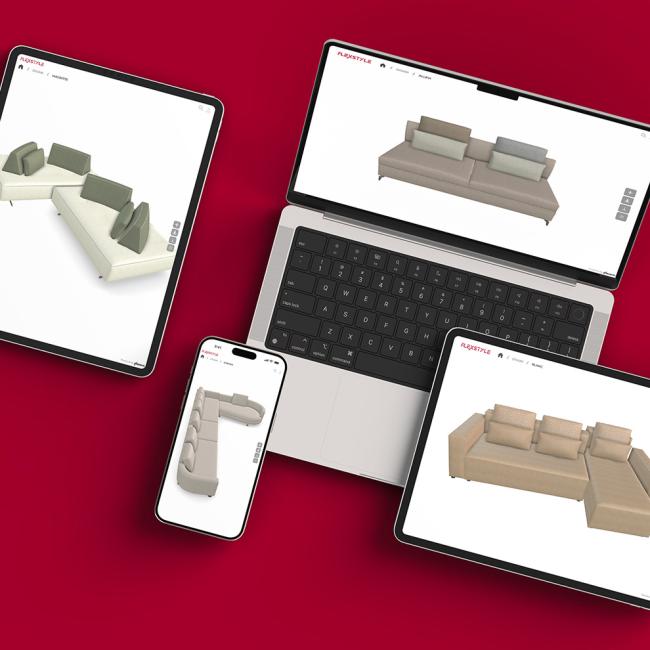
AR is often integrated within a 3D viewer or configurator. After customizing the product online, the user can visualize it in their own environment via a simple "View in AR" button. This approach offers continuity between digital exploration and physical verification, with a fluid, natural, and high-impact user flow.A technology ready to be used
Contrary to what was thought in the past, augmented reality today does not require expensive headsets, dedicated apps, or special devices. A modern smartphone or tablet, a link, and an optimized 3D model are sufficient. Thanks to the native support of systems such as Apple ARKit or Google ARCore, it is possible to implement solutions accessible anywhere and at any time, even offline.AR is not a gadget, but a tool
Augmented reality is not a passing fad or a technology to be left to R&D labs. It is a concrete, useful, and now mature tool, capable of improving communication, supporting sales, and offering relevant digital experiences. In an era where physical distances matter less, but experience continues to matter a great deal, offering a more direct and immersive way to present your products can truly make a difference.
3D Configurator and augmented reality: the new frontier of interactive marketing
The integration between 3D configurators and augmented reality represents one of the most advanced solutions for evolved digital marketing today. It is not just about showing a product, but about transforming the user into an active protagonist of the purchasing experience.Through a 3D configurator integrated with AR technology, the customer can:
- customize the product by choosing colors, materials, finishes, and variants
- visualize the result in real-time with high-definition realistic renderings
- rotate, zoom, and explore every detail of the model
- project the object into their own environment via smartphone or tablet
- verify proportions, footprint, and harmony with the surrounding space
This combination of customization and immersive visualization increases emotional engagement, reduces uncertainty, and shortens the decision-making path. The user no longer imagines the product: they "experience" it directly in their own real context.
From an SEO and conversion point of view, an augmented reality product configuration system allows you to:
1. increase the time spent on the site
2. improve the conversion rate
3. reduce returns in e-commerce
4. collect strategic data on customer preferences
In the furniture, fashion, automotive, industrial machinery, and design sectors, augmented reality applied to 3D visualization is becoming a true competitive advantage. Companies that invest in these solutions do not just offer a product, but an innovative digital experience that strengthens the perceived value of the brand.